
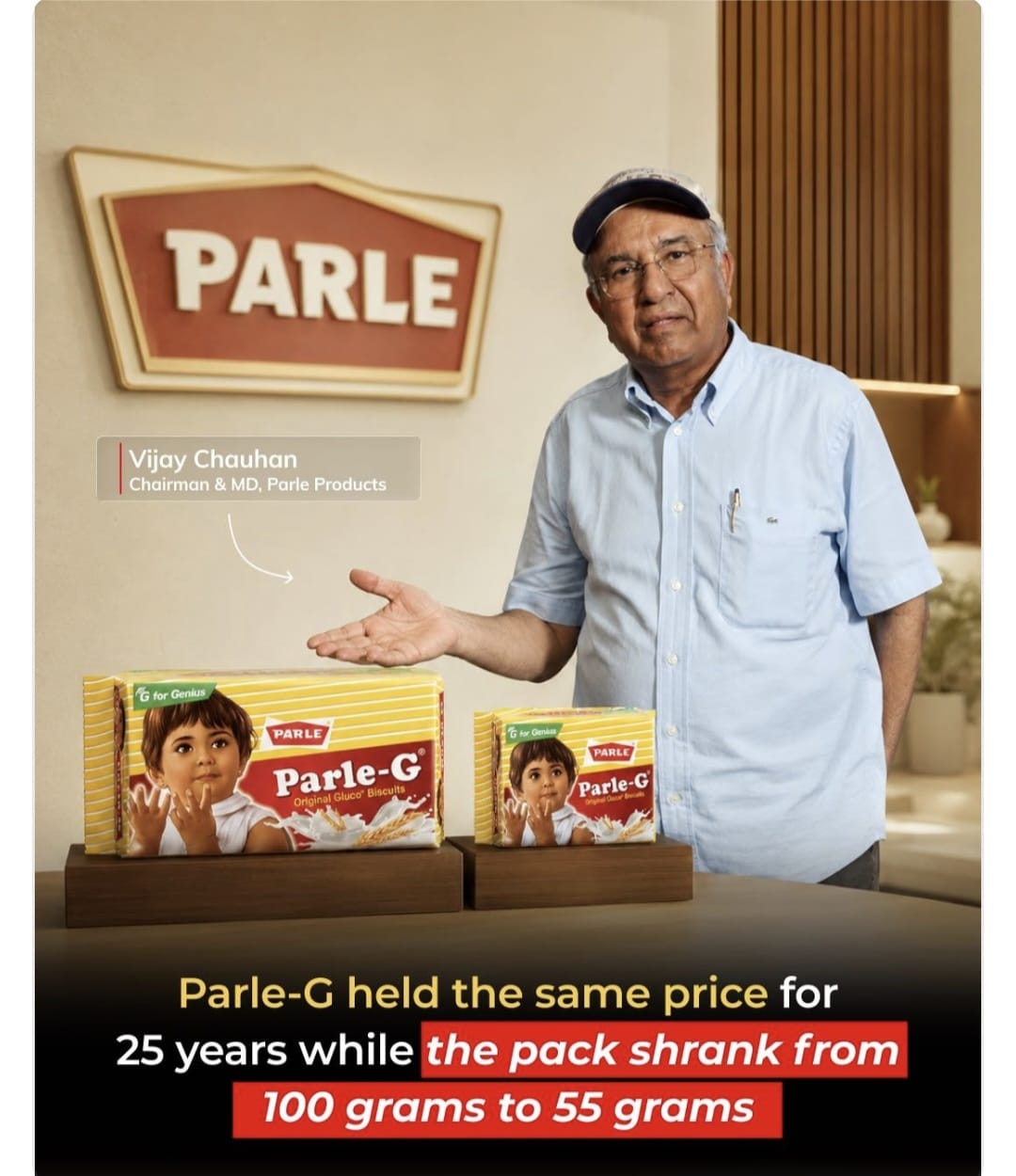
Have you ever picked up a packet of Parle-G and felt that something was... different? The price seems familiar, but the pack somehow feels lighter. You're not imagining it!
This is a classic example of shrinkflation— where companies reduce the quantity of a product instead of increasing its price. 📦⬇️
Why do brands do this?
💰 Rising costs of ingredients like wheat, sugar, and edible oils
🏭 Higher manufacturing and transportation expenses
😊 Customers often react more strongly to a price hike than to a slight reduction in quantity
Is it a smart strategy?
✅ Keeps products affordable for price-sensitive consumers
✅ Maintains the psychological comfort of a familiar price point
❌ Some customers eventually notice the reduced quantity and may feel disappointed
The Bigger Picture 🌍
Parle-G isn't alone. Many popular snacks, chocolates, and household products have quietly become smaller over the years while keeping the same price tag. It's a strategy used by brands worldwide to manage inflation without shocking consumers.
💭 What's Your Take?
Is shrinkflation a clever business move that helps brands survive rising costs, or should companies be more transparent when reducing pack sizes?
Sometimes, the price stays the same—but the value feels different.