
For years, Indian youth have been told the same things repeatedly:
“You’re distracted.”
“You complain too much.”
“You spend too much time online.”
“You don’t understand the system.”
And then suddenly, the internet responded with something nobody expected:
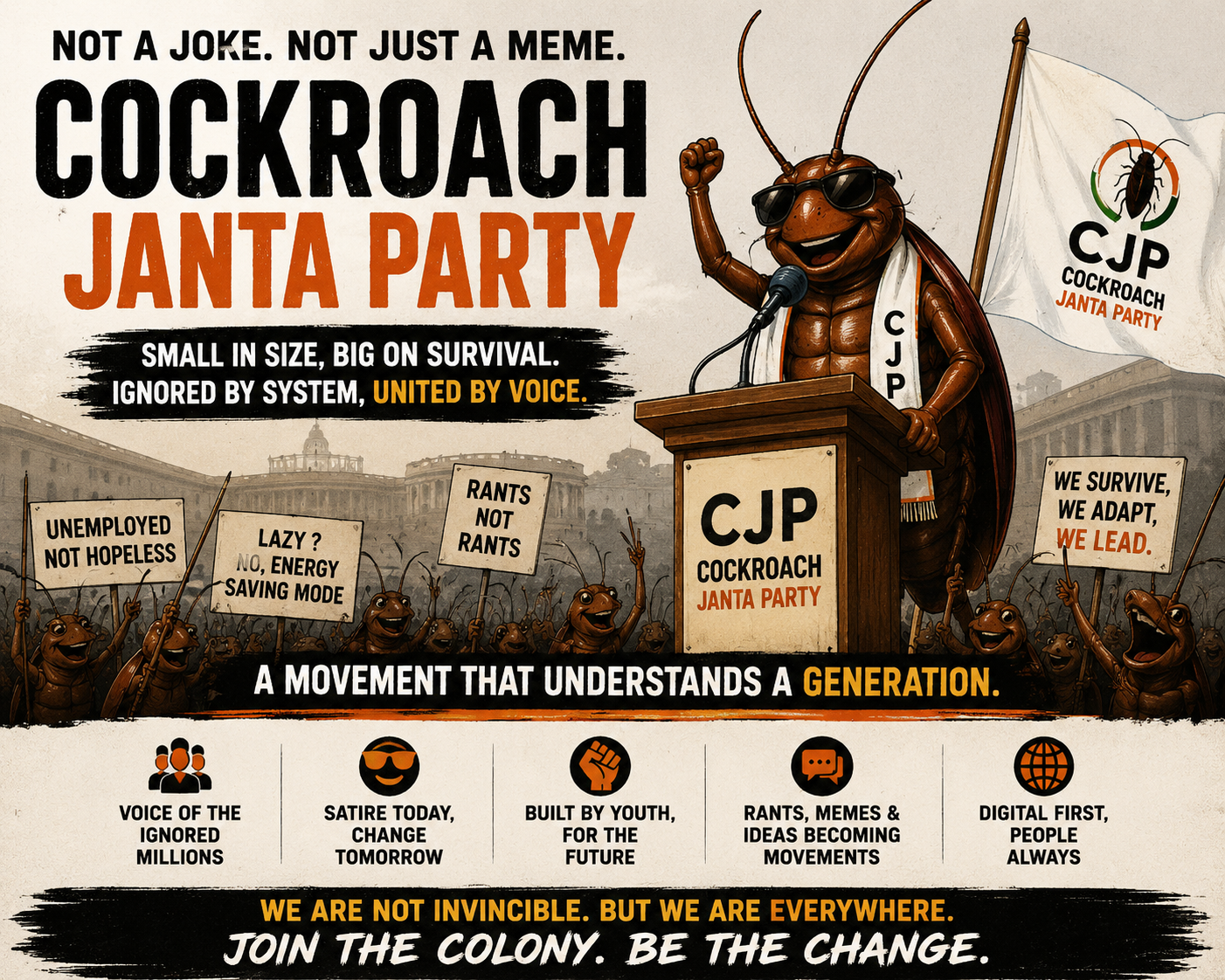
Cockroach Janta Party.
At first glance, the name sounds like peak meme culture. Weird. Chaotic. Ridiculous. The kind of thing you laugh at for five seconds before scrolling ahead.
But here’s the thing.
The more you look at it, the more you realize this movement is not just a joke.
It’s satire with frustration hidden underneath.
Why Are Young People Relating To It?
The rise of Cockroach Janta Party says a lot about how India’s younger generation communicates today.
Traditional political language no longer connects with everyone. Long speeches, scripted debates, and repetitive promises feel disconnected from the reality many students and young professionals face daily:
-
unemployment
-
pressure to “hustle”
-
rising competition
-
burnout
-
internet addiction
-
feeling unheard
Instead of responding with anger alone, the internet did what it does best:
It turned pain into humour.
And somehow, that humour became a movement.
The party’s intentionally absurd branding, chaotic memes, and self-aware tone make it feel less like a political campaign and more like a community of people saying:
“Yeah, life is messy. We know.”
That honesty is exactly why it’s spreading so fast.
The Branding Is Weirdly Brilliant
Let’s be honest.
“Cockroach Janta Party” is an unforgettable name.
In an era where attention spans disappear in seconds, the movement understood something most organizations still don’t:
People notice authenticity faster than perfection.
The cockroach itself becomes a metaphor:
-
ignored
-
difficult to eliminate
-
constantly surviving
-
adapting to harsh conditions
That symbolism unintentionally reflects how many young people feel today.
No fancy political jargon.
No overproduced seriousness.
Just raw internet culture mixed with satire.
And weirdly enough… it works.
A New Form of Political Expression
Whether this becomes a real political force or remains a cultural internet moment, it has already achieved something important:
It got young people talking again.
Not through fear.
Not through textbook nationalism.
Not through aggressive debates.
But through memes, humour, relatability, and participation.
That matters.
Because modern political engagement no longer starts from newspaper headlines alone. It starts from reels, comments, memes, Discord servers, WhatsApp groups, and trending jokes.
Cockroach Janta Party understands internet-native communication better than many actual political campaigns.
And that’s exactly why older systems are struggling to understand it.
Is It Serious? Maybe That’s The Wrong Question
A lot of people are asking:
“Is this even real politics?”
But maybe the better question is:
Why are so many people emotionally connecting with it?
Movements don’t go viral at this scale unless they touch something real underneath the humour.
Even if the party never contests elections, it has already become a symbol of digital-age frustration and youth identity.
And honestly, that alone makes it culturally important.
Final Thoughts
Cockroach Janta Party may have started as satire, but it reflects something deeper about this generation:
Young people are tired of pretending everything is fine.
They want honesty.
They want participation.
They want spaces where humour and seriousness can exist together.
And maybe that’s why this movement feels different.
Because beneath all the memes and chaos, there’s a generation trying to be heard in its own language.
And for the first time in a while, the internet is actually listening.