
A new US law has put the spotlight back on one big question: What happens to countries like India that continue buying Russian oil?
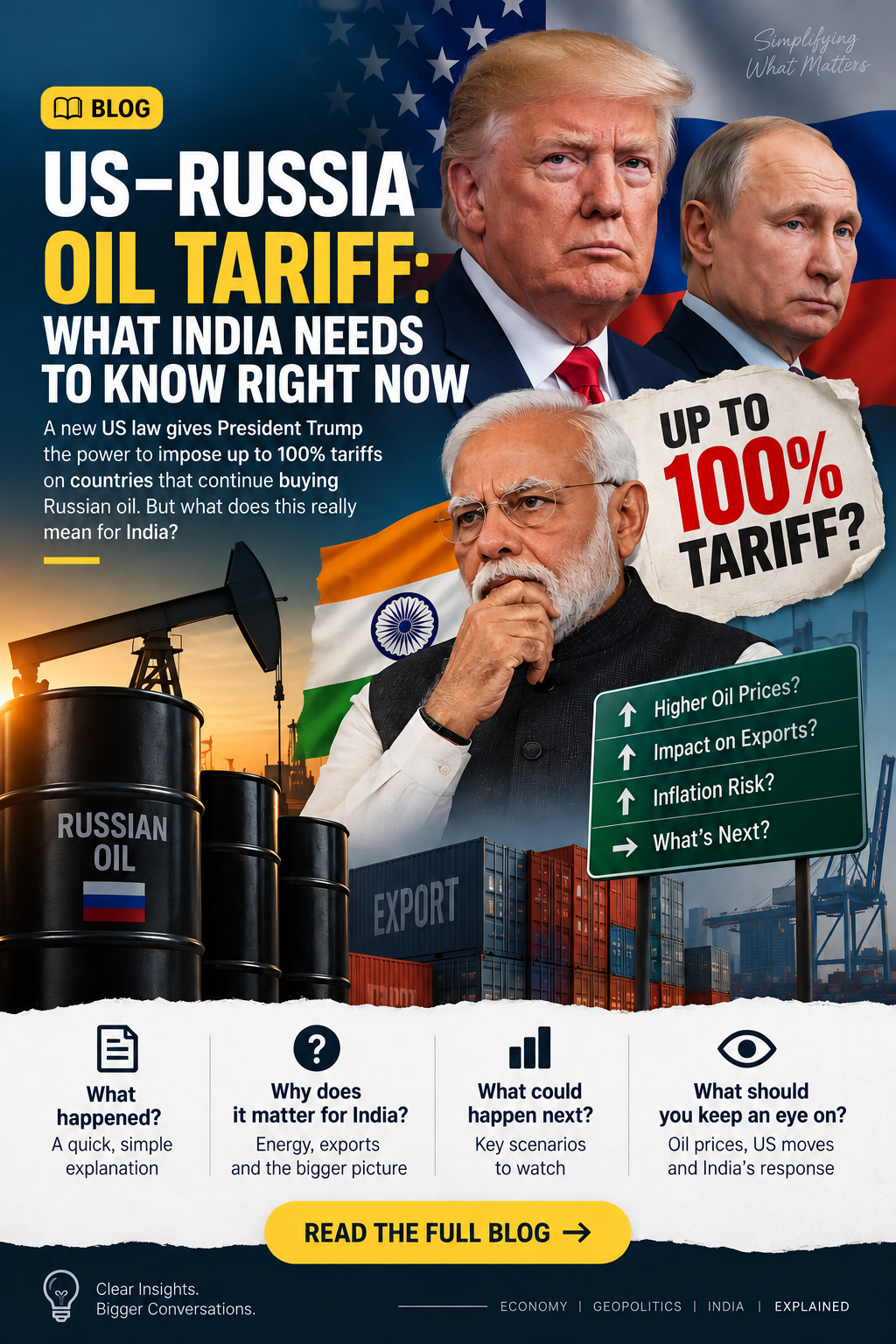
The headline doing the rounds is that the US can impose a 100% tariff on countries buying Russian oil. But there’s an important catch: the US has not imposed a 100% tariff on India right now.
Here’s what actually happened — and what we should be watching next.
What happened?
On September 18, 2026, US President Donald Trump signed a new law targeting Russia and Iran.
The law gives the US President the power to impose additional tariffs of up to 100% on countries that continue significant purchases of Russian oil and gas.
So, this is authority to impose tariffs, not an automatic 100% tariff.
That distinction matters.
Why is India involved?
India has become one of the biggest buyers of Russian crude oil, largely because Russian oil has often been available at attractive prices.
For India, Russian crude has therefore become an important part of its energy supply.
But the US sees continued purchases of Russian energy as a way of indirectly supporting Russia's economy.
So Washington is now trying to create pressure on countries buying Russian energy:
Buy Russian oil → potentially face higher US tariffs on your exports.
What could happen to India?
There are two sides to this.
If India reduces Russian oil purchases:
India may have to buy more crude from other suppliers. Depending on global prices, this could increase India's oil import bill and potentially put pressure on fuel prices and inflation.
If India continues buying Russian oil:
India could face additional tariffs on goods entering the US if the US chooses to apply them.
That matters because the US is a major export market for India.
Sectors such as pharmaceuticals, textiles, engineering goods, electronics, chemicals and jewellery could potentially feel the impact if broad tariffs were introduced.
But don't panic over the “100%” headline
A 100% tariff sounds enormous — and it would be significant if applied broadly.
But there are several steps between the law being passed and a country actually facing a 100% tariff.
The US still has to decide:
-
Which countries will be targeted?
-
What tariff rate will apply?
-
Which products will be covered?
-
When would the tariffs start?
-
Will countries receive exemptions or other arrangements?
So 100% is currently the maximum possible rate, not India's current tariff rate under this law.
What should we watch now?
The next few weeks are more important than the headline itself.
Keep an eye on four things:
1. India's Russian oil imports
Does India actually reduce purchases from Russia?
2. US announcements
Does Washington announce a specific tariff on India, and if so, at what rate?
3. Crude oil prices
If millions of barrels of Russian oil have to find new buyers while India and other countries look for alternative supplies, global oil prices could become more volatile.
4. The Indian rupee and inflation
India imports most of its crude oil. A sustained rise in global oil prices can increase the country's import bill and put pressure on the rupee and inflation.
The bigger picture
This isn't simply a story about America and Russia.
For India, it is a balancing act between energy security and export access.
Russian oil can help India manage its energy costs and supply. At the same time, the US is a very important market for Indian exporters.
That is why the next move from Washington — and India's response to it — matters much more than the “100% tariff” headline itself.
Bottom line:
The US has created the possibility of tariffs of up to 100% against major buyers of Russian energy. India has not been hit with a new 100% tariff under this law yet.
For now, the key question isn't “Has India been hit with a 100% tariff?”
It is:
“Will the US actually use this new power against India — and how will India respond?”